Most backyard feeders come from a store. My main ones are tree trunks, scrap wood and a dead limb, and along with my perches and native plants, they’ve helped me photograph 44 bird species in my native wildflower bed since April. Here’s how each one works, and why I use them.
Log feeders
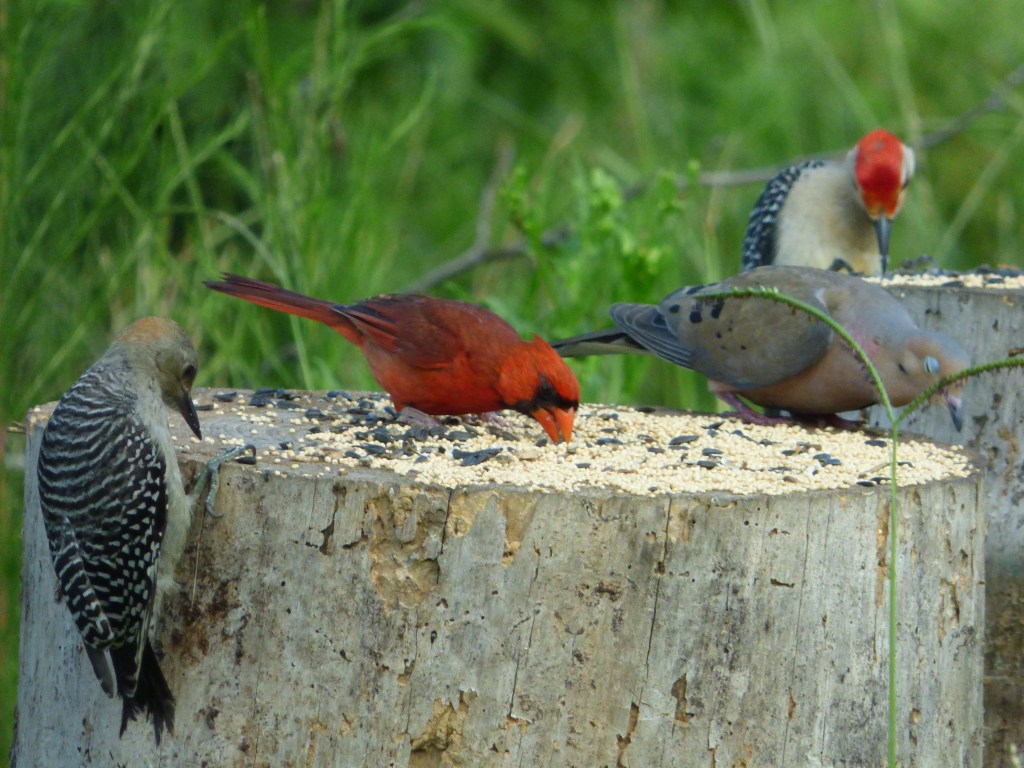
My main feeders are upright sections of tree trunks from larger trees that were cut down. Ideally they’re 2 to 4 feet tall and 18 to 24 inches across, but none of that is a hard rule. Use whatever you can manage, as long as the top is flat and big enough to hold some sprinkled seed. If the top isn’t level, set the log a little into the ground until it is.
Why logs?
- They’re simple. In the morning I pour some seed on top from a cup. I add more later if I want, and it’s no problem if the birds clean it all up.
- You can clear them at night. At the end of the day, I gather any leftover seed off the top, so there’s less to draw mammals after dark.
- Ground feeders are comfortable on them. So far, even my ground-feeding birds, like doves, sparrows and thrashers, have been content feeding on my logs, which puts them at a better height for photos.
- Wet or extra seed is easy to deal with. Just brush it off onto the ground for whatever birds or other wildlife want it.
- They look natural. A bird on a log looks like a bird in the wild, not a bird on a plastic feeder.
Birds I’ve photographed on my log feeders include all the common feeder birds, like cardinals, titmice, chickadees and nuthatches, as well as warblers, grosbeaks, buntings, sparrows, woodpeckers and more. I’ve used feeder logs for years. See many more birds on them in my Flickr album from a nature preserve I managed in South Carolina: Birds on Feeder Logs
Trough feeders
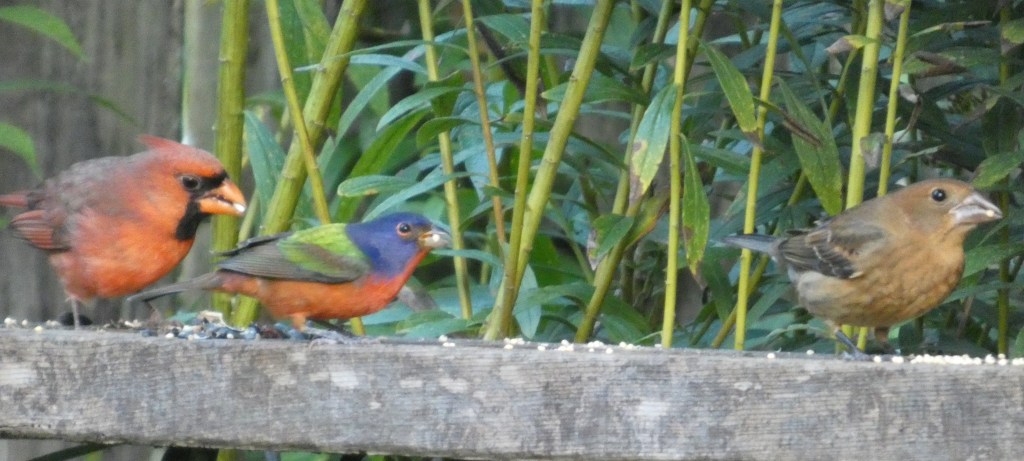
My trough feeders are made from the grooved 2×2 wooden strips used to protect the edges of pallet loads. The groove holds seed neatly. A trough can be fastened on top of a post set in the ground, or laid across low branches in a small tree or shrub. I keep one trough with white millet only, tucked against my goldenrod, where Painted Buntings can feed with less competition from bigger birds.
The suet snag
A snag is a standing dead tree. Mine is a manageable tree trunk or straight limb, 4 to 6 inches across and 8 to 12 feet tall, set upright in the ground. I prefer older wood, but not too rotted. I drill 1 to 4 holes with a paddle bit, ½ inch to 1½ inches wide and about ½ inch deep, and pack them with suet in the morning or as needed. Suet can also be spread into any natural or carved grooves and crevices. Packed or spread this way, it makes birds work to get it out, so they stay longer instead of flying off with a chunk.
I often place a small perch in a drilled hole next to a suet hole. Woodpeckers cling to the trunk easily, but many other birds don’t, and the perch gives them a place to stand while they feed.
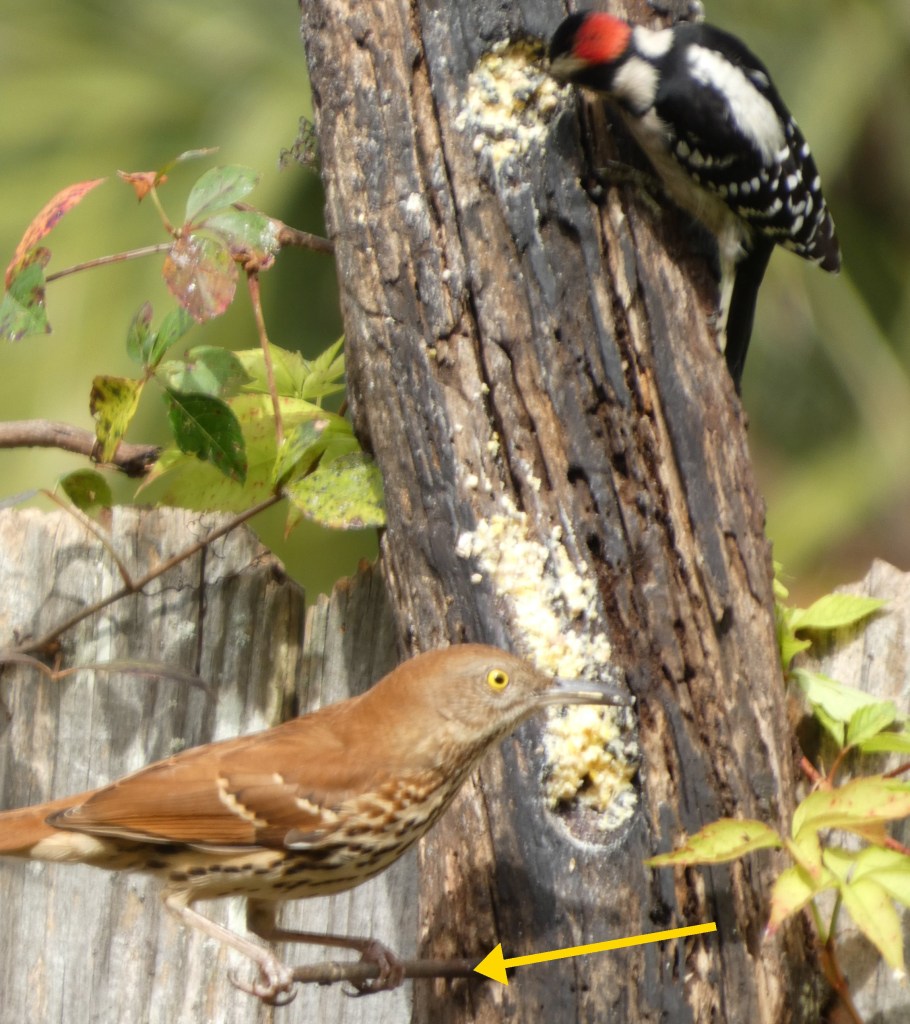
My suet snag has drawn Brown Thrasher, Gray Catbird, Northern Mockingbird, Northern Cardinal and at least five warbler species: Orange-crowned, Palm, Common Yellowthroat, Yellow-throated and Yellow-rumped. Two winters ago, I recorded 43 Yellow-throated Warbler observations on iNaturalist, which I credit to my suet and feeding stations.
Other options
Common feeders work too: standard hopper feeders, tray feeders, tube feeders, and specialty feeders such as thistle, hummingbird and oriole feeders. If you’d rather feed on the ground, keep a clear patch of open ground near cover. I don’t put seed on the ground myself, since I’d rather have birds on a log where I can photograph them, but some spillage is fine.
A fair word on the downsides
Open log tops and troughs don’t protect seed from rain the way covered feeders do. That’s why I put out small amounts and brush off wet seed. Logs eventually rot, and not everyone has easy access to cut tree sections. If a tree service is working in your neighborhood, though, they’re often glad to leave a few.
Pair them with perches
Feeders work best with perches nearby, and right at the feeders themselves, because birds like to land and look around before they feed. As a bonus, a perch at the feeder gives birds somewhere to sit between bites, which keeps more of their droppings off the feeding surface.
- Learn how to place perches in my guide: Bird Perches Matter.
- Want to know exactly what I feed: My 3 Bird Feeds.
- And to put it all together in your own yard: Turn Your Backyard into a Birding Hotspot.


Leave a Reply