Last updated: October 29, 2026
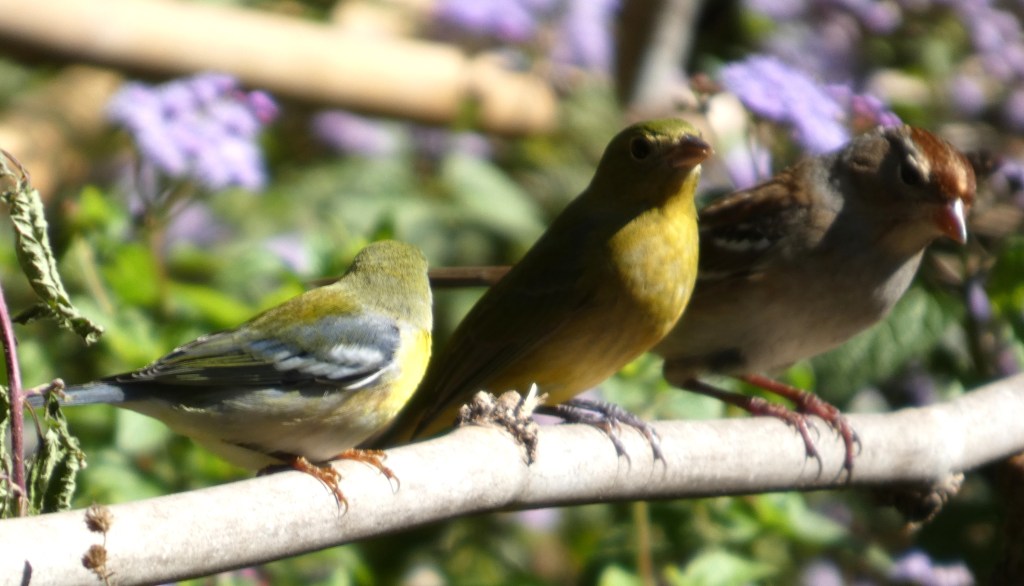
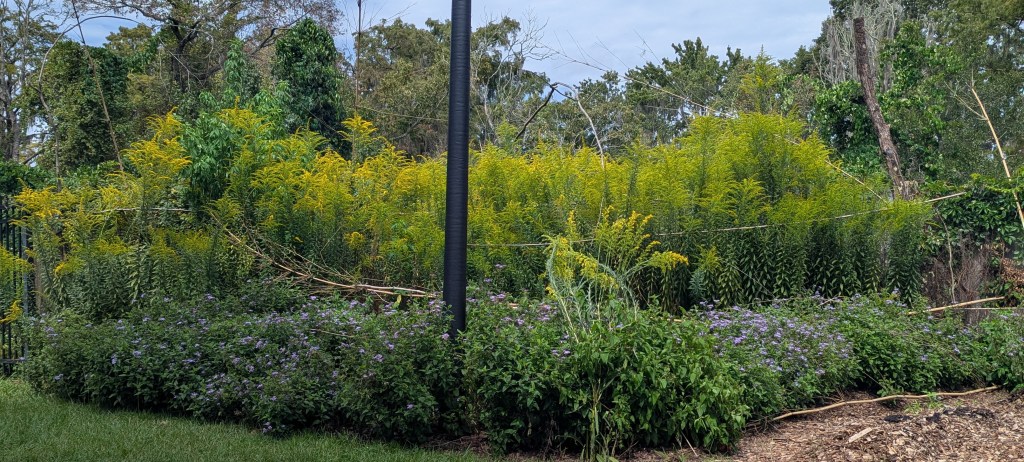
This spring I turned a patch of mowed apartment-complex lawn in Jacksonville, Florida, into a native wildflower bed of roughly 350 square feet. It’s planted mainly with Blue Mistflower, Tall Goldenrod, and American Trumpet Vine, with a few volunteers that came up on their own. The first bird visit I recorded was April 19. Here is what it has attracted since, all documented with my own photos, nearly all taken from a chair in front of the bed.
By the numbers (as of October 29, 2026)
- Total plant and animal species recorded in the bed: 161
- Bird species photographed in the bed: 40
- Bird species on a single tall perch, placed May 23: 27
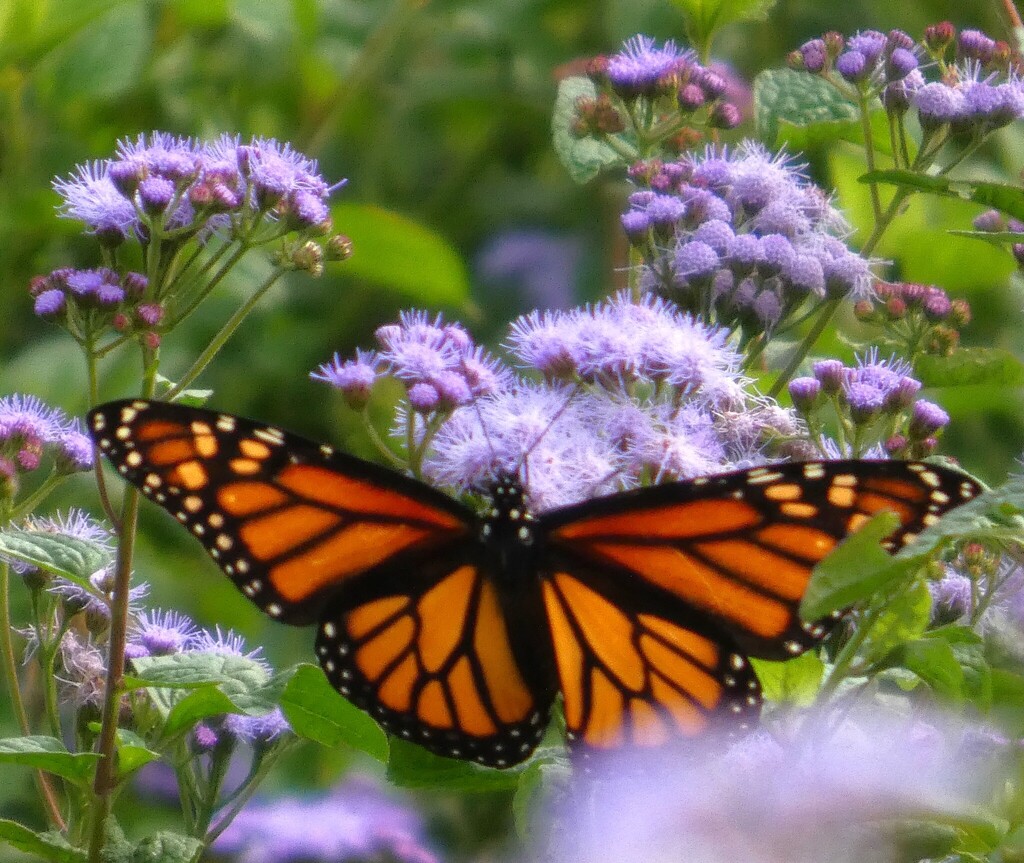
- Butterfly species: 24
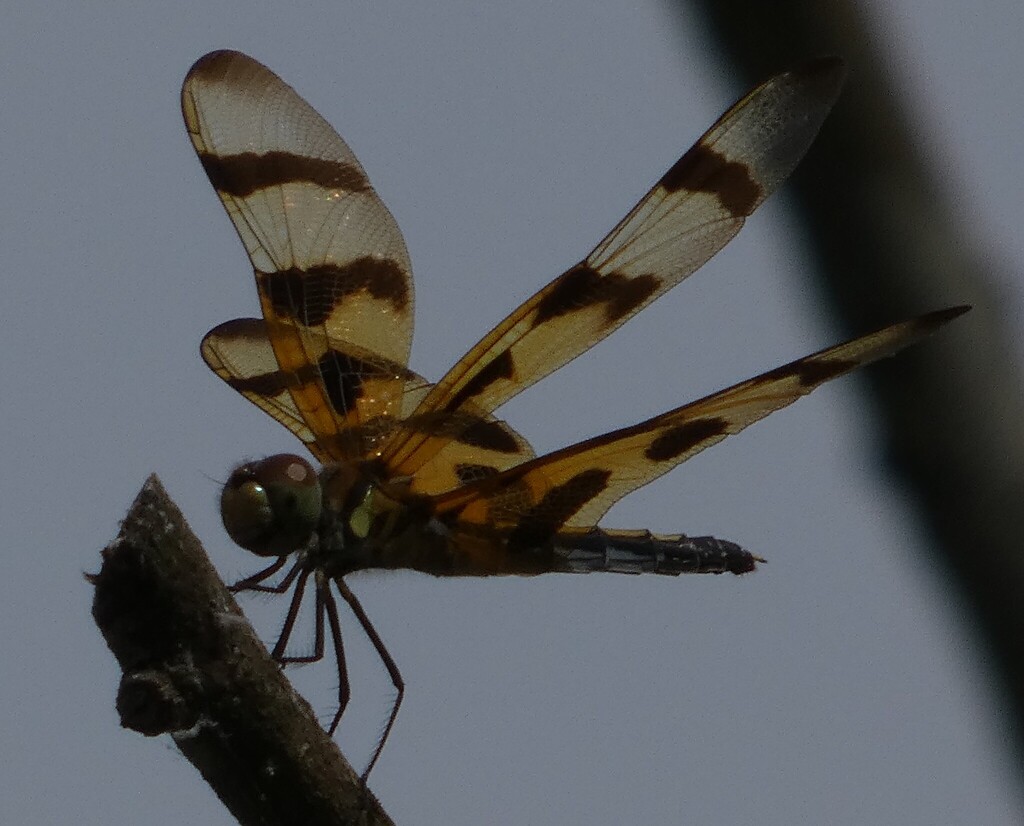
- Dragonfly and damselfly species: 16
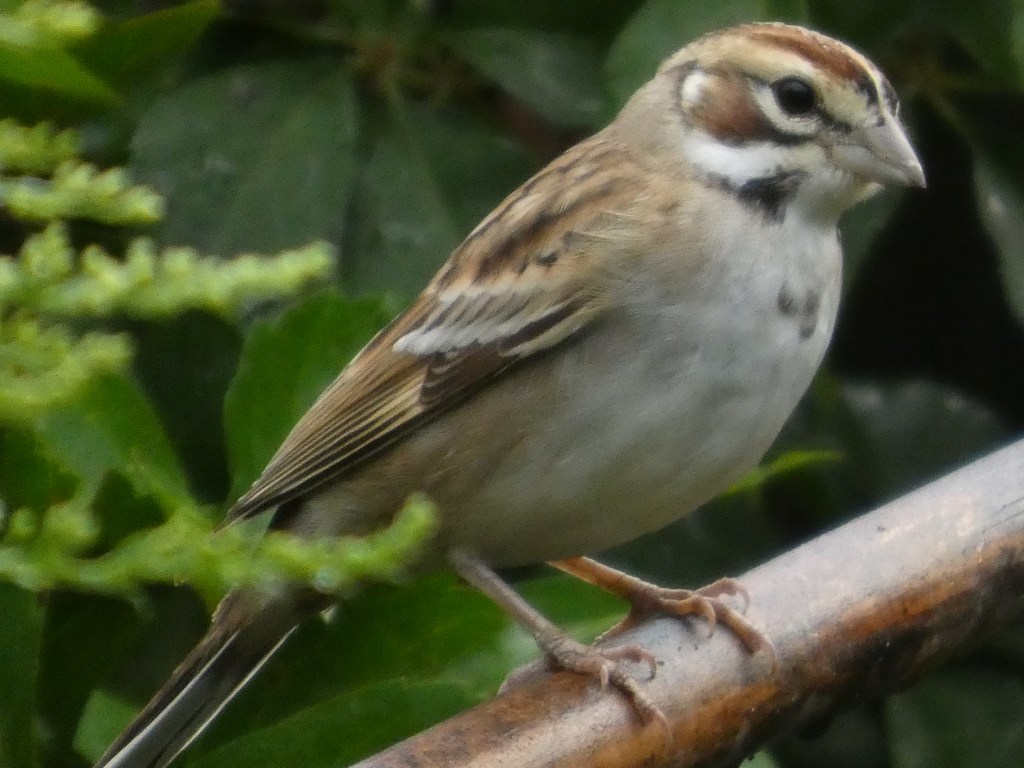
Highlights include a Lark Sparrow, 11 New World warbler species, Yellow-billed Cuckoo, Pileated Woodpecker, Indigo Bunting, Ruby-throated Hummingbird, and wintering Painted Buntings, which are seen daily.
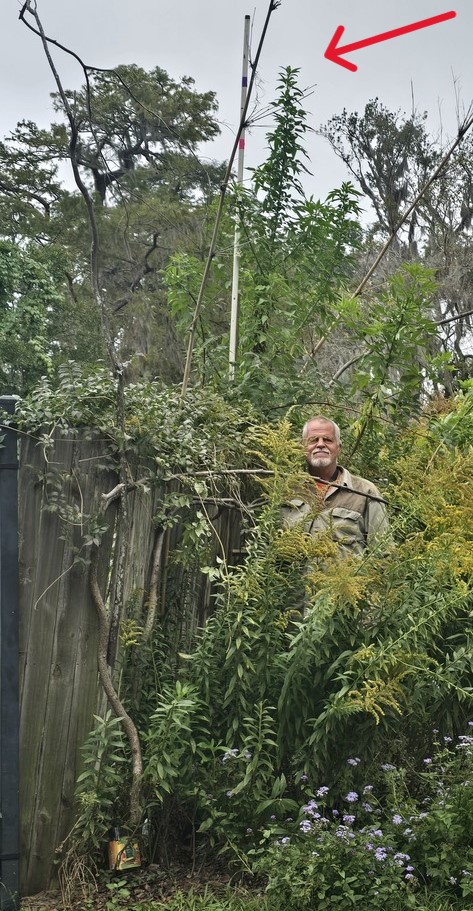
A Bidens alba that outgrew the books
The bed’s most surprising resident is a Bidens alba (Spanish needles) that came up on its own from seed in a potted goldenrod I planted. On October 25 I measured it at about 12.3 feet tall, using a fixed measuring pole set beside the stem and photos taken from 30 to 80 feet away.
For comparison, the Lady Bird Johnson Wildflower Center lists the species at up to about 8 feet tall, often much shorter. Flora of North America gives an extreme of about 250 cm, roughly 8.2 feet. Wikipedia lists approximately 5 feet. The plant was never pruned or staked; neighboring goldenrod and an old fence shelter it from wind but don’t hold it up. Two nearby Bidens alba plants are also oversized, one reaching about 8.5 feet.
Measurement video: https://youtu.be/H-jwZkKc0PQ
iNaturalist observation: https://www.inaturalist.org/observations/410780088
Sources: [Lady Bird Johnson Wildflower Center] https://www.wildflower.org/plants/result.php?id_plant=BIAL | [Flora of North America] https://biokic3.rc.asu.edu/seinet/ecoflora/portal/taxa/index.php?tid=9367 | [Wikipedia] https://en.wikipedia.org/wiki/Bidens_alba
What made the difference in this one small bed.
A few simple choices did most of the work: dense native plantings, perches placed throughout the bed for multiple purposes, including resting, hunting, gleaning insects from nearby plants, and landing out in the open, food sources nearby, and time spent sitting quietly and watching. None of it was expensive.
All observations are posted publicly on iNaturalist: https://www.inaturalist.org/people/2081962


Leave a Reply