When I first started visiting Roxbury Park in South Carolina, I noticed a few small sticks poking up out of the pond. They were all that remained of trees that had fallen into the water years before. Most were no more than an inch or two in diameter and stood only a few inches above the surface. Wading birds were still perching on them, some just three to six inches above the water.
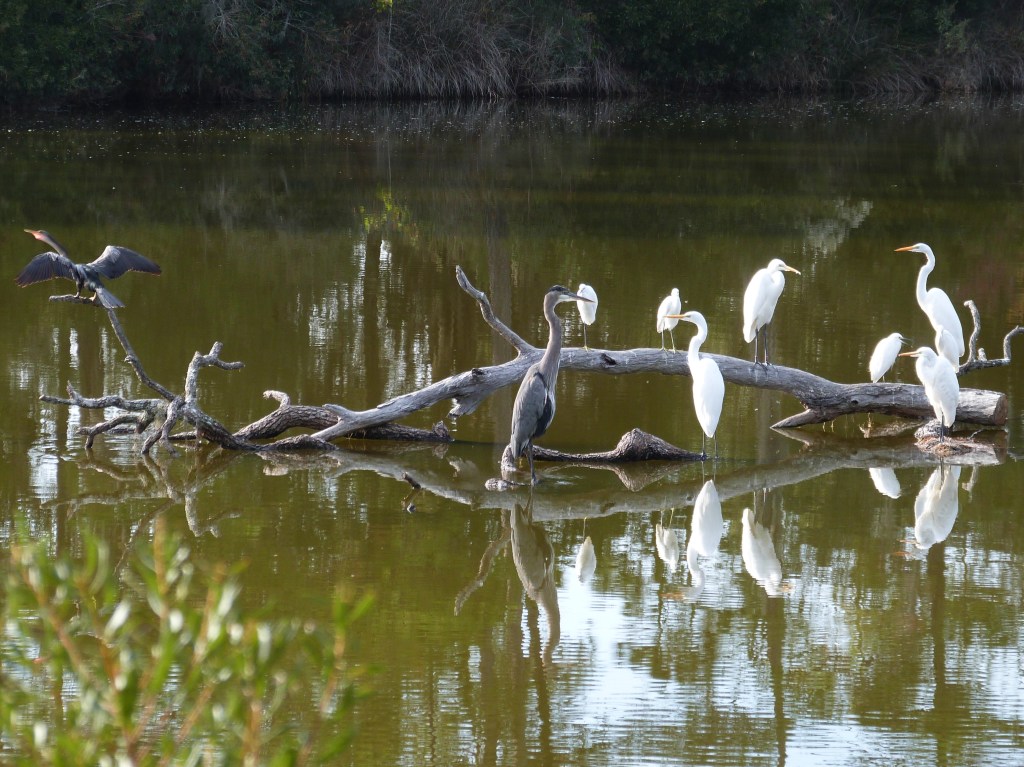
That’s when I got the idea to drop new trees in to replace the old ones that had rotted away. I hinge-cut a tree along the pond’s edge so it fell into the water while staying attached at the base. The first one had birds on it within 24 hours, and my photos show its pine needles were still green. Egrets and herons took to it almost immediately, using it to rest, preen, and watch the water for fish.
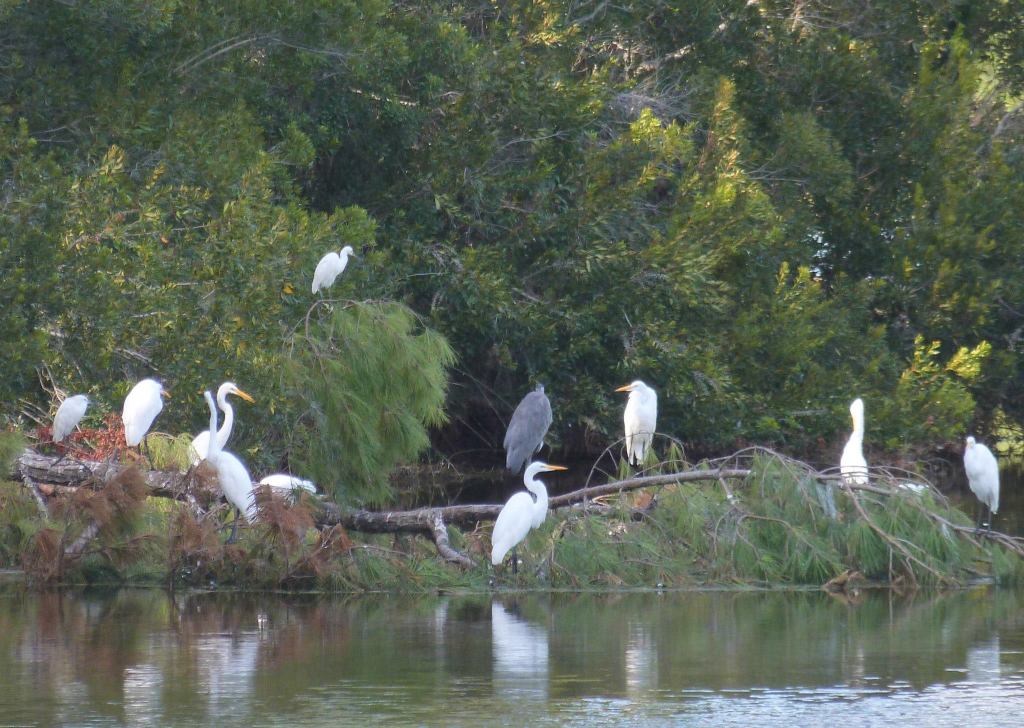
A hinge-cut tree works so well because it gives wading birds something most maintained ponds lack: sturdy, open perches right over the water, with clear views in every direction. A single tree can hold a whole group at once, and it often does.
The cut is made partway through the trunk, low on the tree, so it bends over into the water instead of breaking free. The height of the hinge sets how high the trunk sits above the surface. The tree stays anchored in place, and it can keep living for a while.
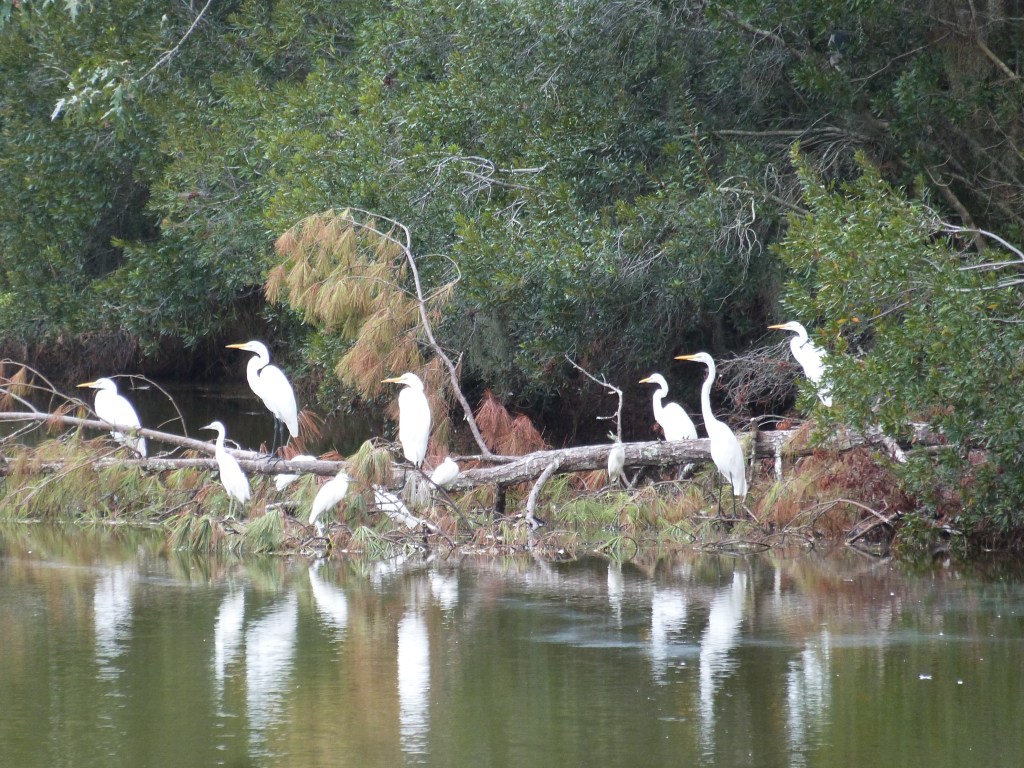
A second kind of water perch came about by chance. A large limb fell from one of the live oaks up by the cottage. Live oak is one of the most rot-resistant woods in the eastern United States, so I cut a couple of the smaller branches off it. Smaller is relative: they were still big, and live oak is so dense that they were very heavy. I hauled them to the pond’s edge with my utility vehicle, then dragged them out to a shallow spot in the middle of the pond. Thankfully they moved through the water more easily than I expected. Near the banks the water was about four feet deep, but in the center it stayed around six inches deep most of the year. I set the two limbs there and left them. And did they ever produce.
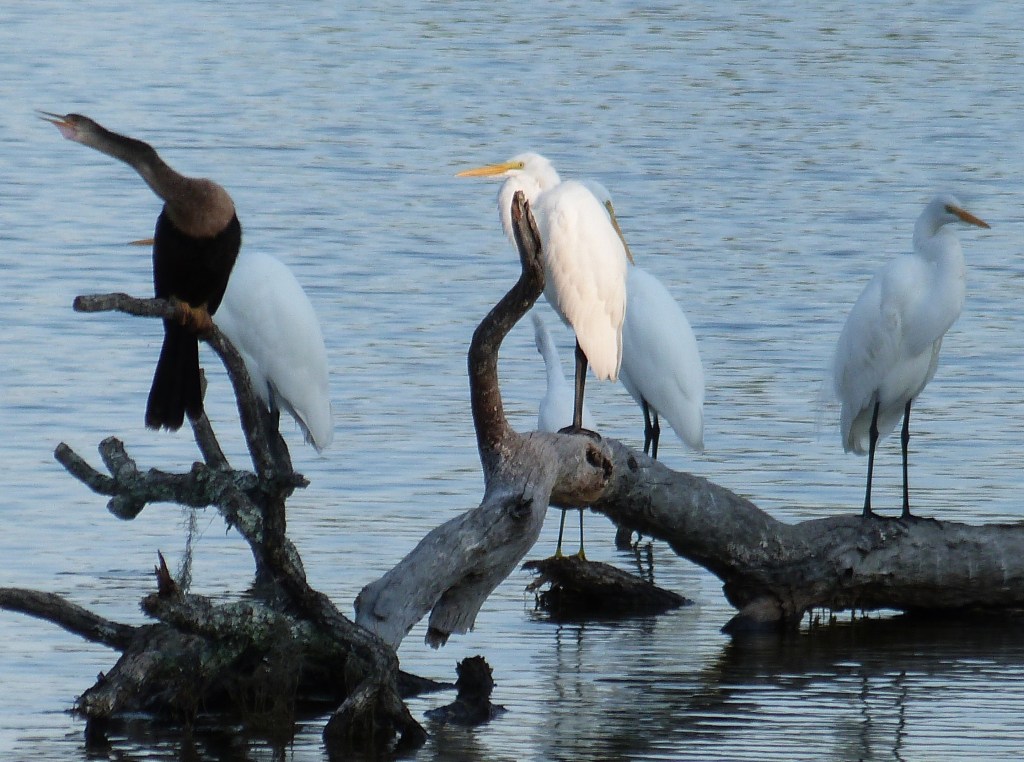
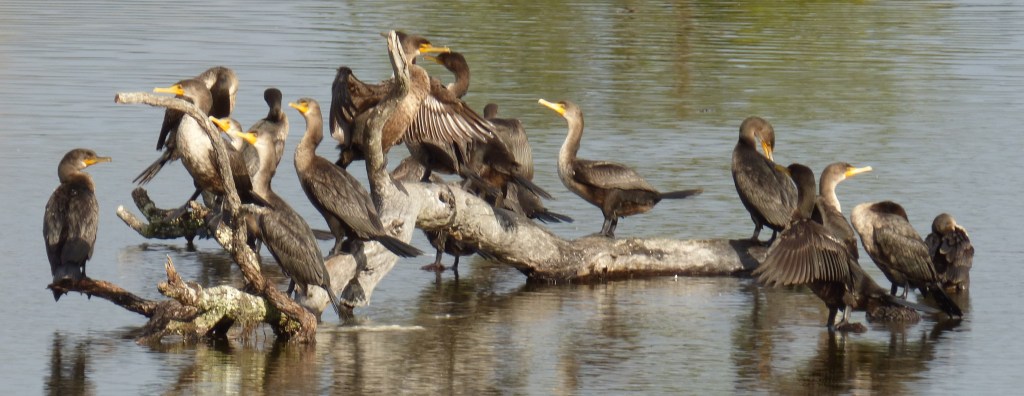
Wading birds made up the bulk of the visitors, but cormorants and anhingas used these perches heavily too.
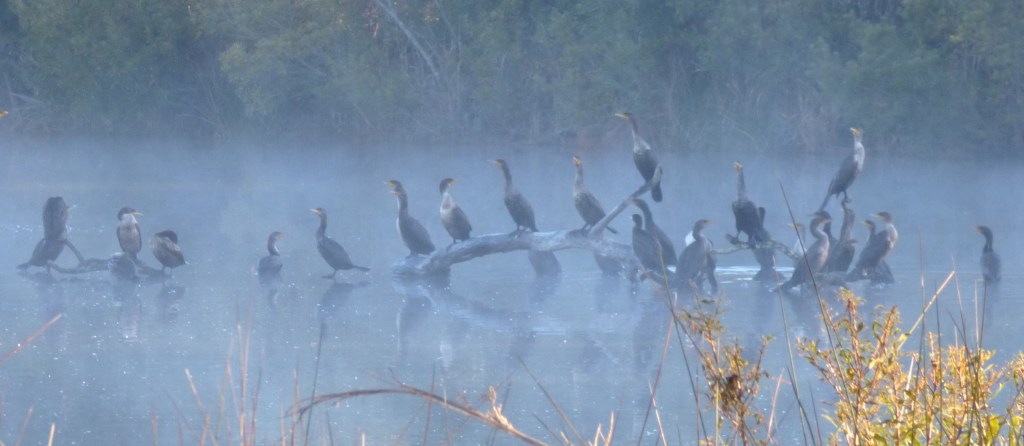
A few things to keep in mind: this is only for property where you have permission, and dropping trees should be done by someone experienced with a chainsaw. On ponds used for fishing, it’s worth marking where the trees are so anglers know what’s below the surface. Done right, though, a single dropped tree or a couple of heavy limbs can turn an empty stretch of shoreline into one of the best places on the property to watch birds.


Leave a Reply