Blue Mistflower isn’t the only plant that pulls in Monarchs. A few others in my own beds and elsewhere have earned their keep this season.
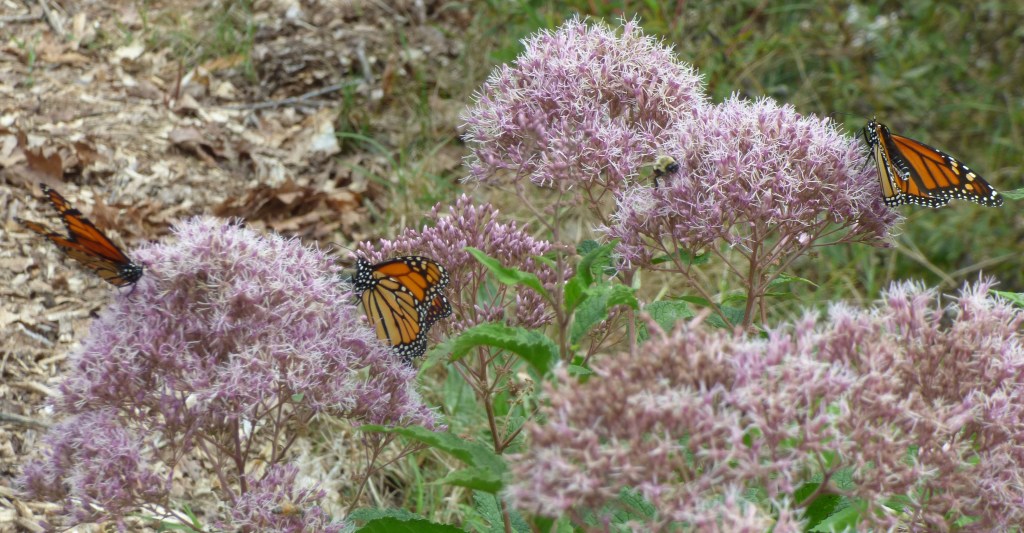
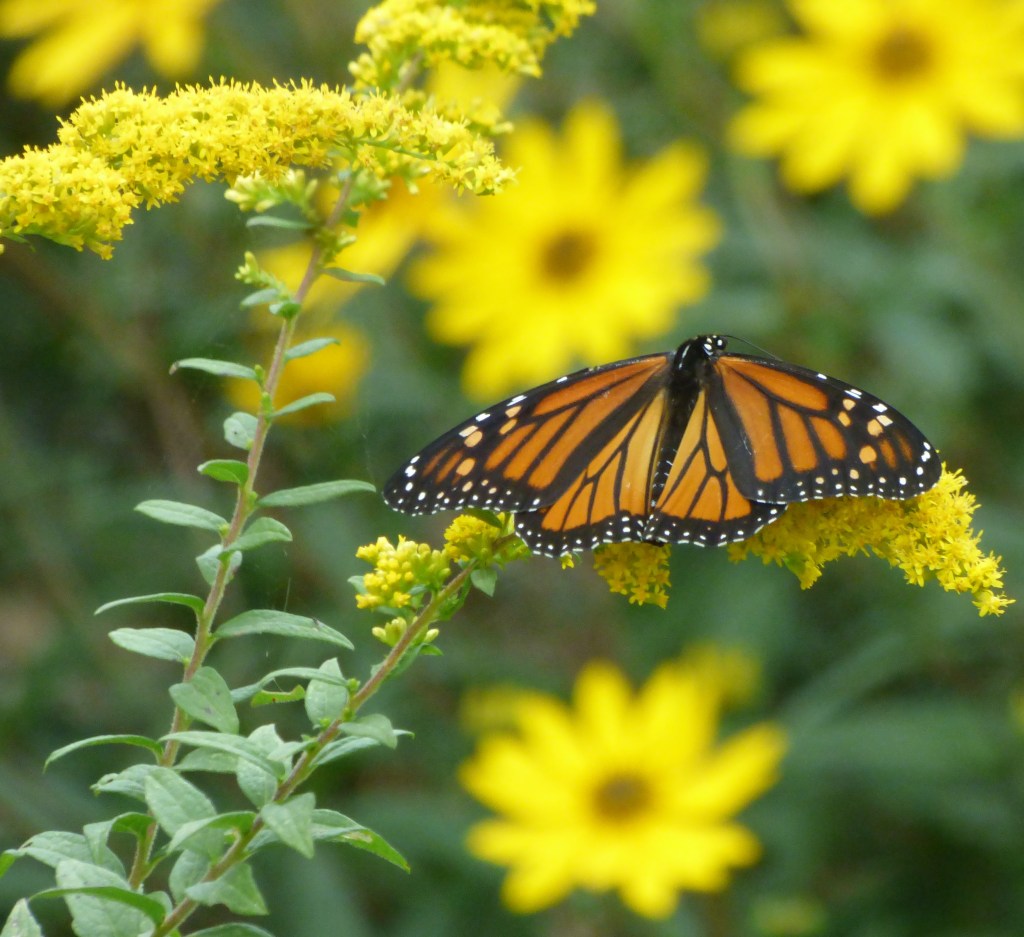
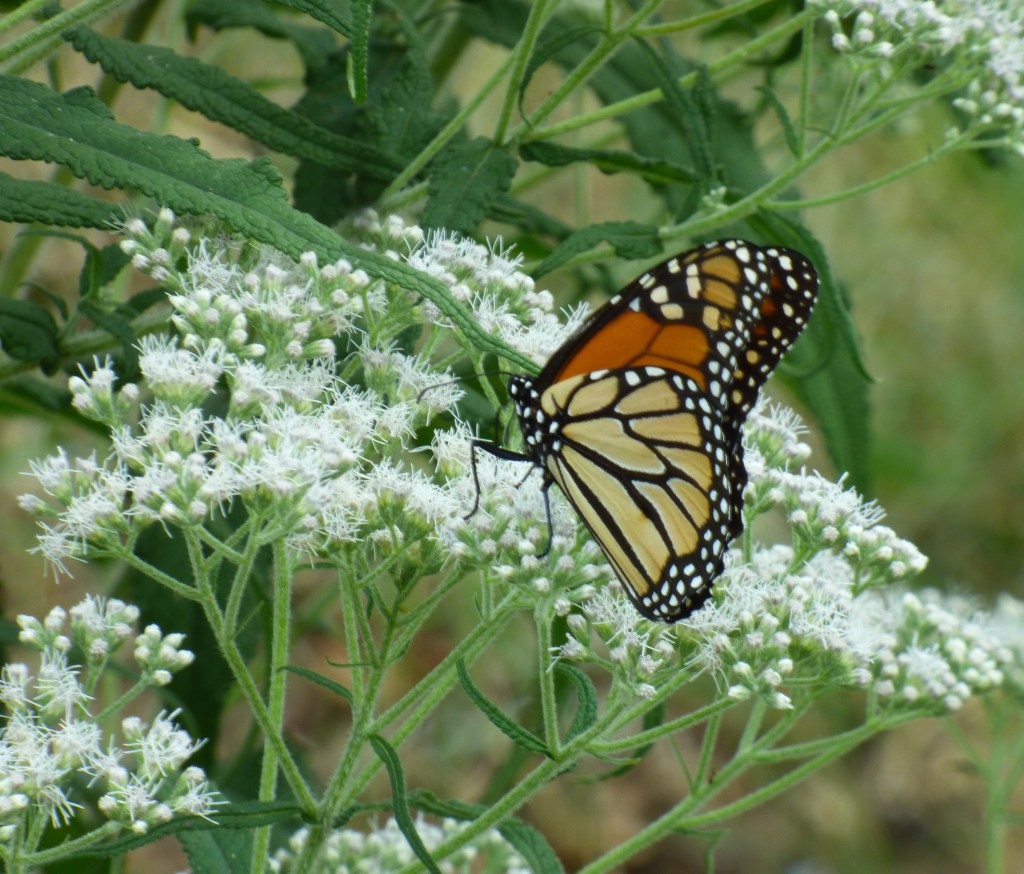
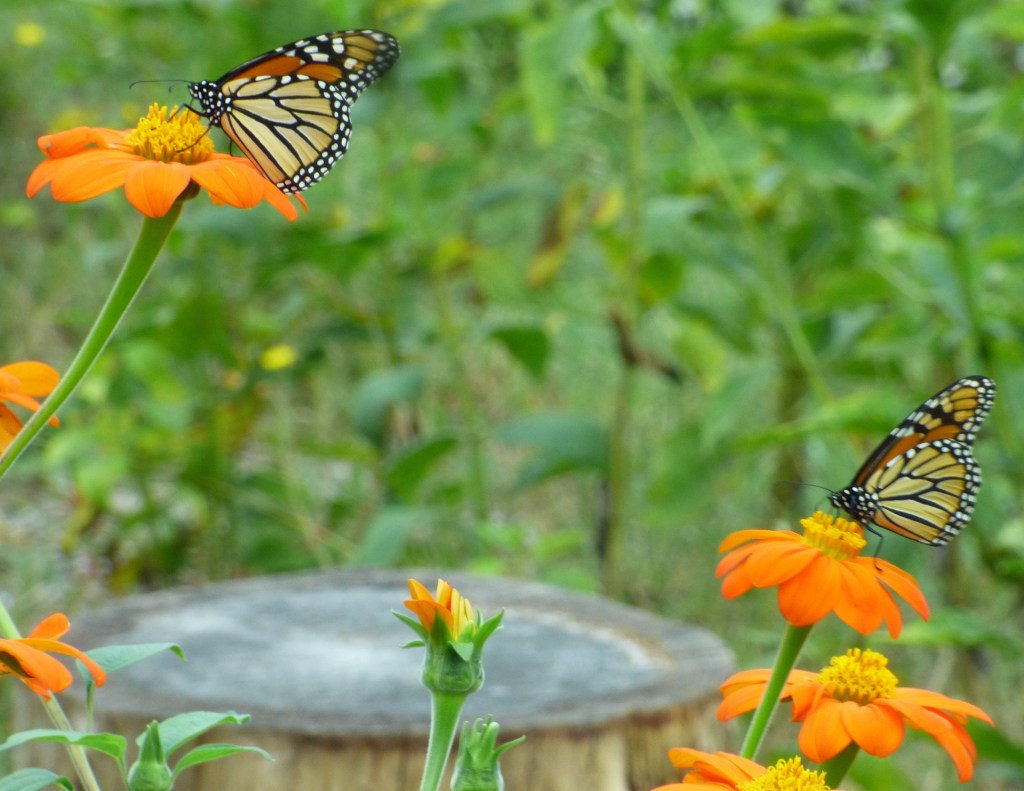
Joe-Pye Weed draws them reliably — I’ve had three Monarchs and a bumblebee and a honey bee working the same blooms at once. Elliott’s Aster does the same, with three Monarchs nectaring together in one frame. Tall Goldenrod and Common Boneset have both had Monarchs on them as well. Mexican Sunflower, though not native, is a well-documented Monarch magnet — and as an annual, it blooms all summer long, not just during fall migration.
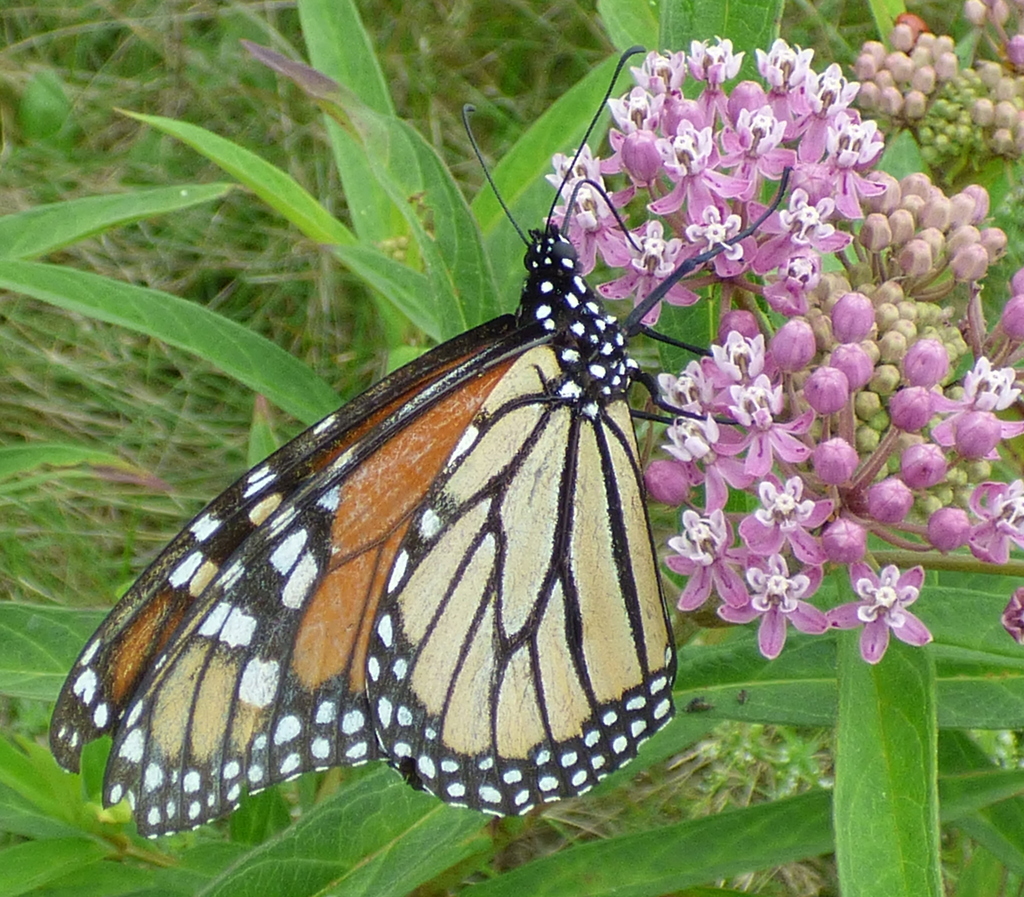
Milkweed deserves a mention too, though it plays a different role. It’s the host plant Monarch caterpillars depend on, and adults do nectar on it when it’s blooming — I’ve photographed them on Common Milkweed, Butterfly Weed, and Swamp Milkweed. But by the time fall migration comes through, most milkweed has already finished its bloom cycle for the year. It’s essential to the Monarch’s life cycle, just not a major fall nectar source.
Then there’s Liatris. Search YouTube for the best plant for Monarchs and it’s repeatedly mentioned as the runaway favorite, and it’s easy to see why — Monarchs do love it. But “most recommended” isn’t the same as “most effective,” and the case for it usually stops at one plant, one season, one photo. It doesn’t hold up when you multiply it out. One Liatris divides into maybe a handful of new plants the following year. One Blue Mistflower, propagated right, can become hundreds of plants — potentially over a thousand — in a single season.
That’s the real difference. Blue Mistflower blooms exactly when fall migration passes through, and it scales in a way nothing else on this list can match. A few isolated Liatris stalks might draw a Monarch or two. A few hundred Blue Mistflower plants can draw a hundred Monarchs at once. That’s not a matter of taste — it’s math. And I’m not just guessing at that math. I’ve grown enough Blue Mistflower, season after season, to know exactly how fast it multiplies — and it’s nothing like Liatris.



Leave a comment