American Trumpet Vine (Campsis radicans) doesn’t need an introduction for most gardeners — it’s already known as two things: an excellent hummingbird attractor, and an aggressive grower that can take over a fence line, a tree, or a structure if it’s not kept in check. Both reputations are earned. But there’s a third story about this plant that gets far less attention: just how many different species actually visit its flowers, and what the data on that reveals — not because those visitors are hidden, but because most people simply aren’t watching closely enough to notice them.
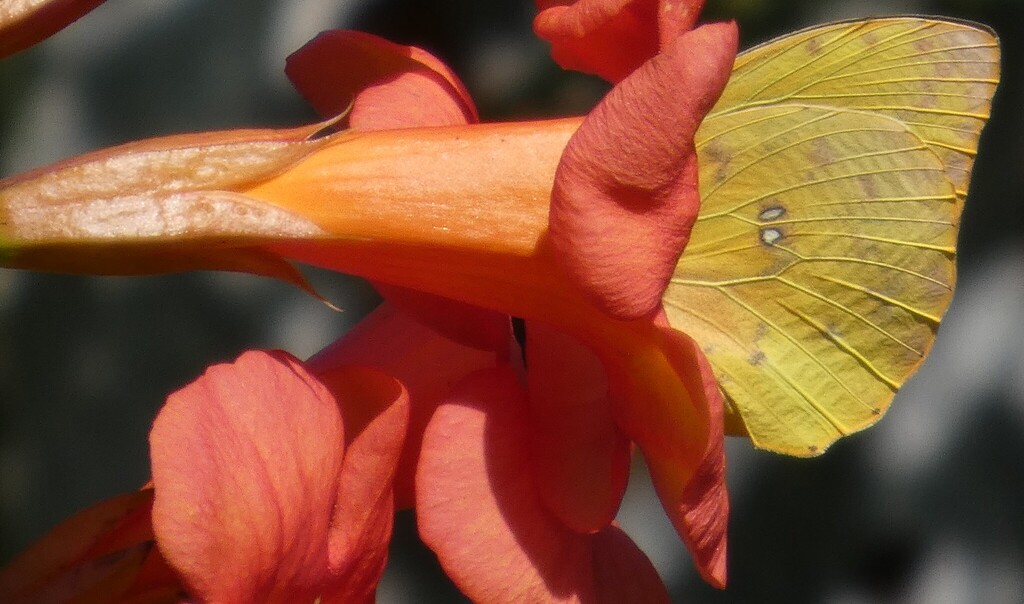
On iNaturalist, there’s an optional data field called “flower interacted with” — a small extra step observers can choose to fill in when logging a photo of an insect or bird on a plant. It’s entirely voluntary, and most people skip it. But the ones who don’t have quietly built something worth looking at: a running record of exactly which species show up on trumpet vine blooms, one confirmed observation at a time.
So far, that record shows 86 different insect species documented interacting with trumpet vine flowers, logged by 104 different observers. Ten of those are butterflies.
The shape of the data is the interesting part. One observer alone accounts for 47 of the 86 species — more than half. The next-closest sits at 9. Third place, and several others tied with it, have just 3. A single dedicated recorder has logged more species diversity than the other 103 observers combined could match.
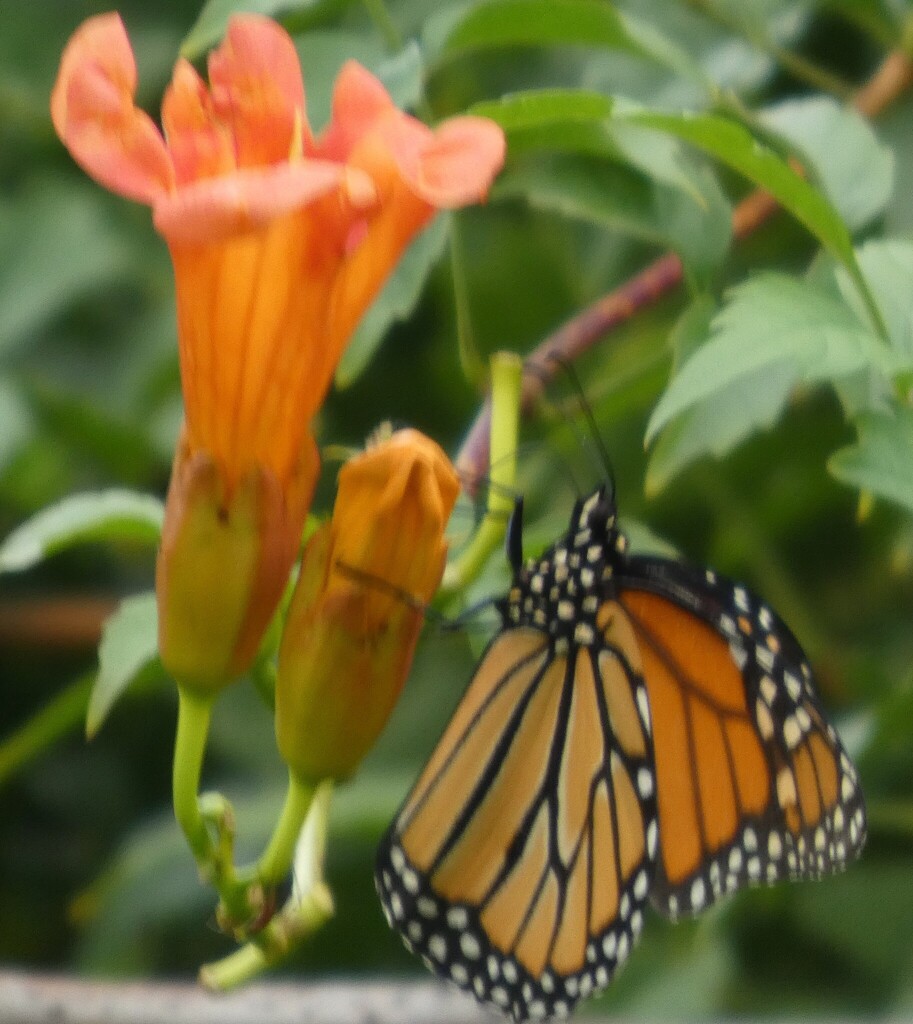
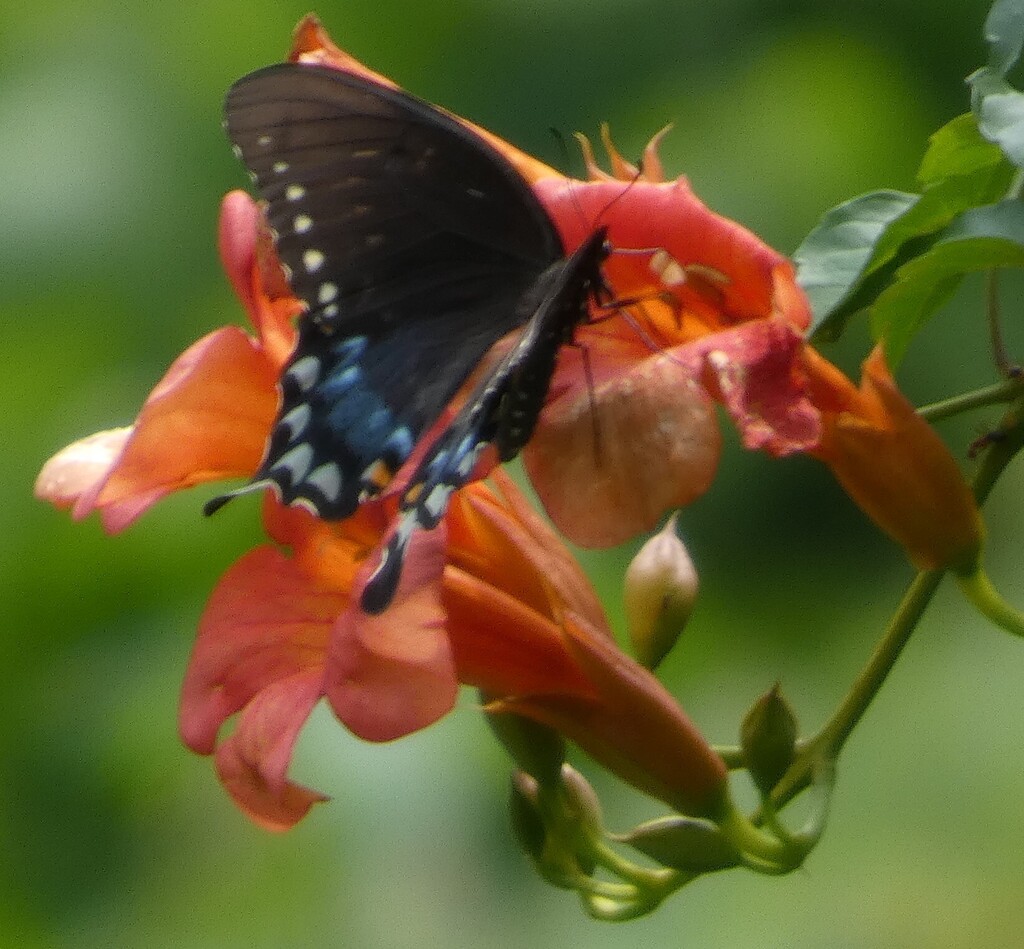
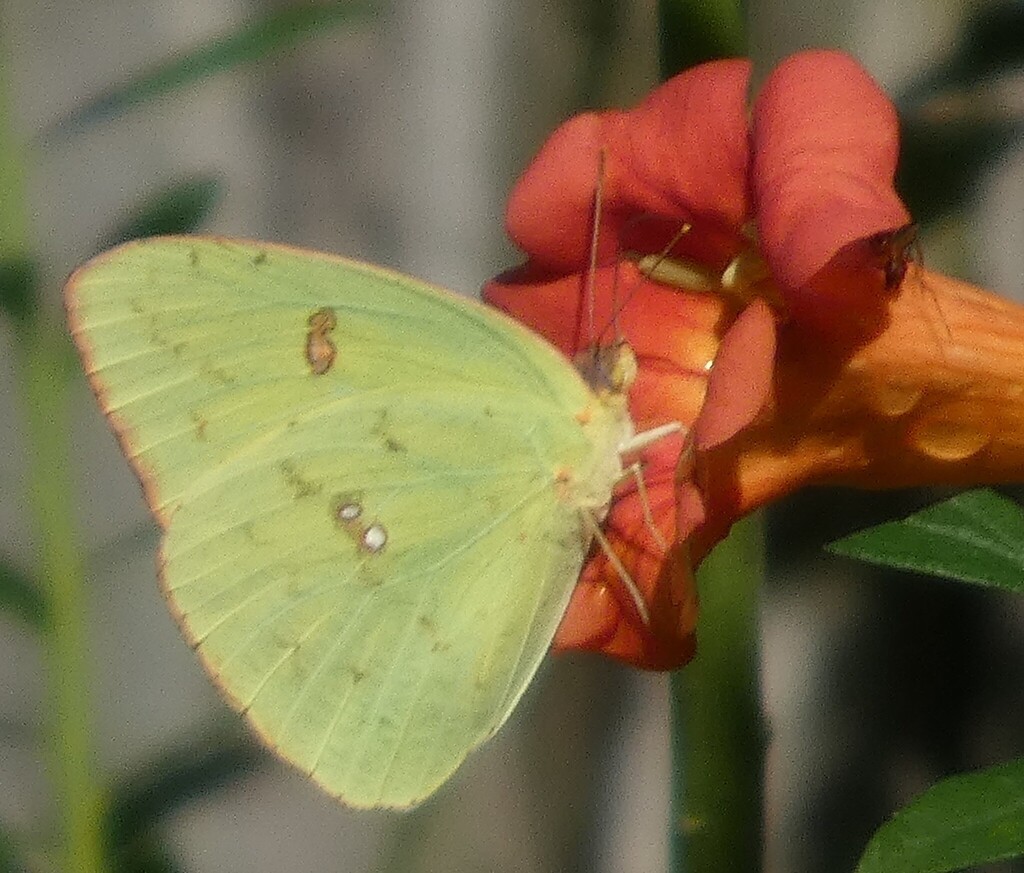
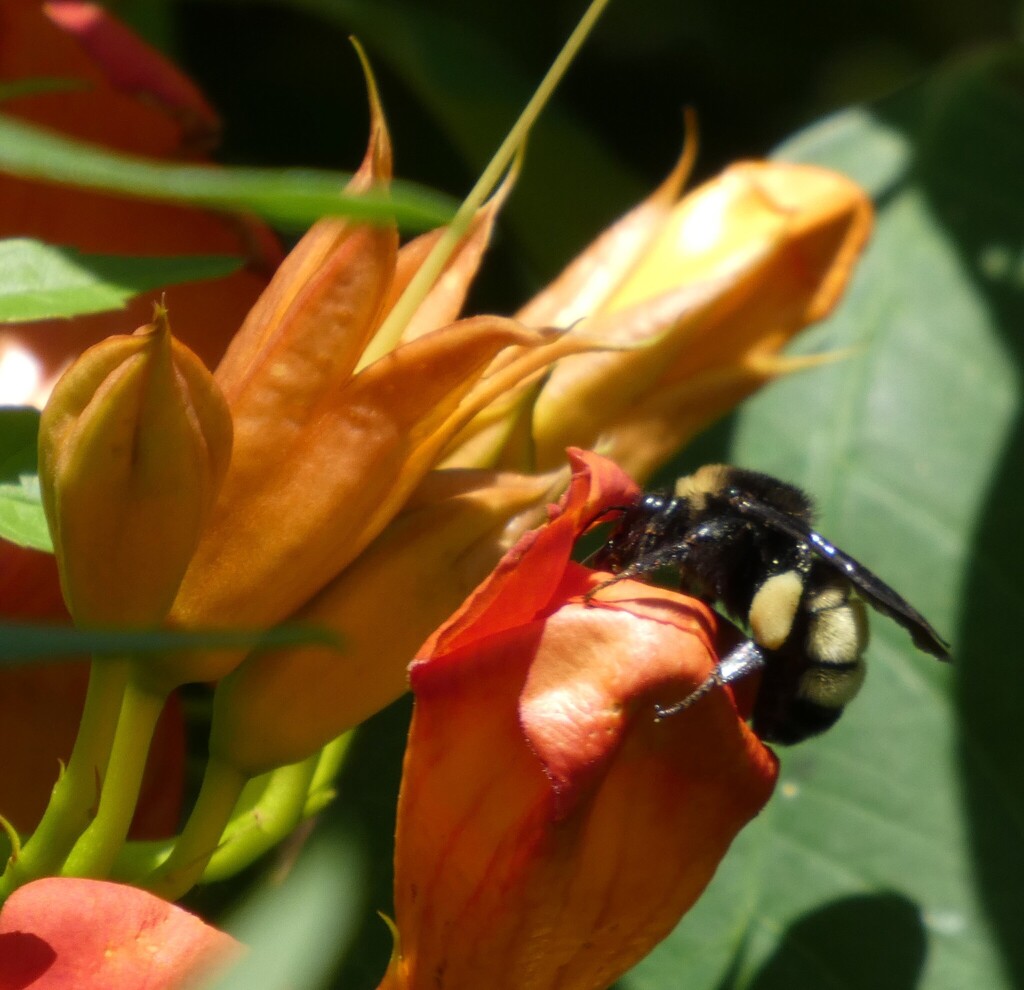
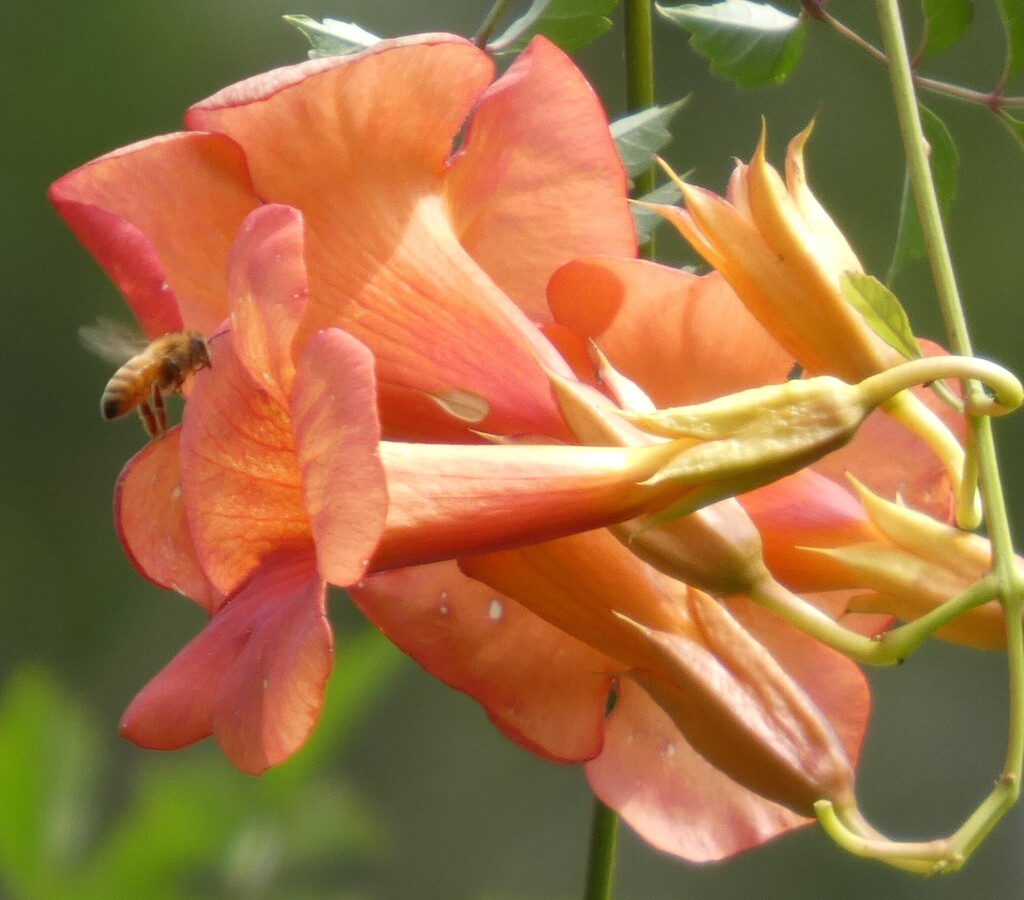
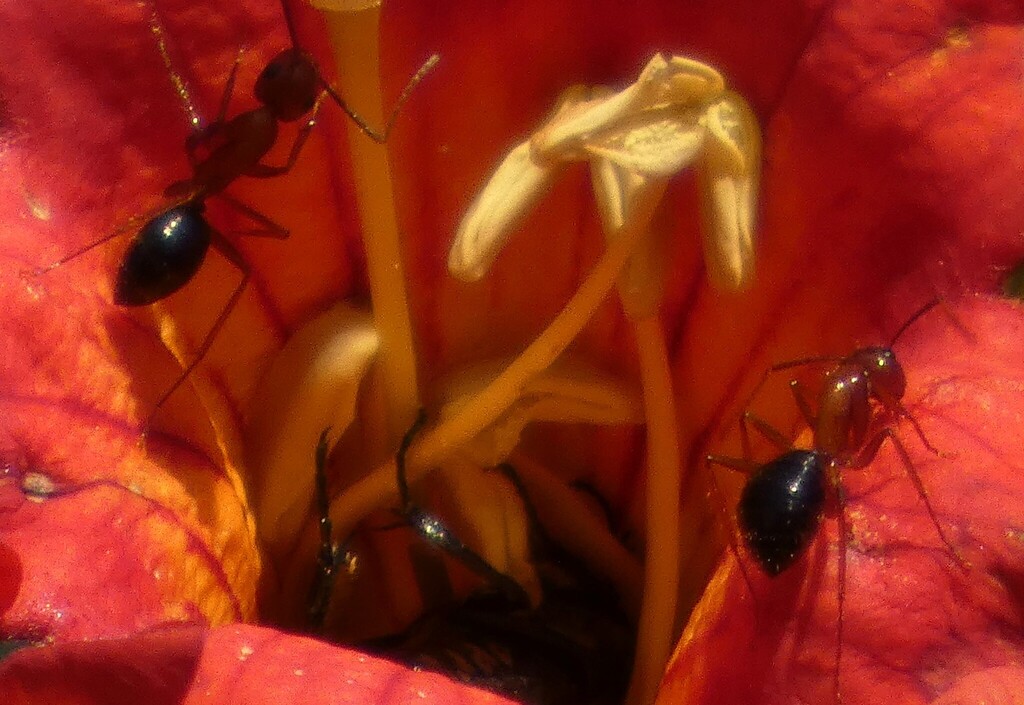
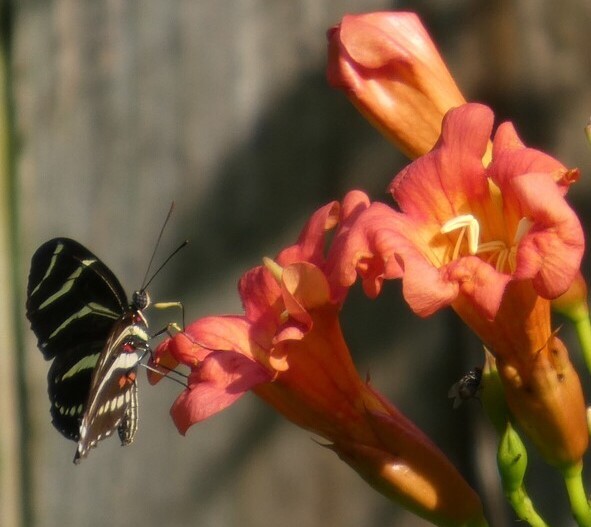
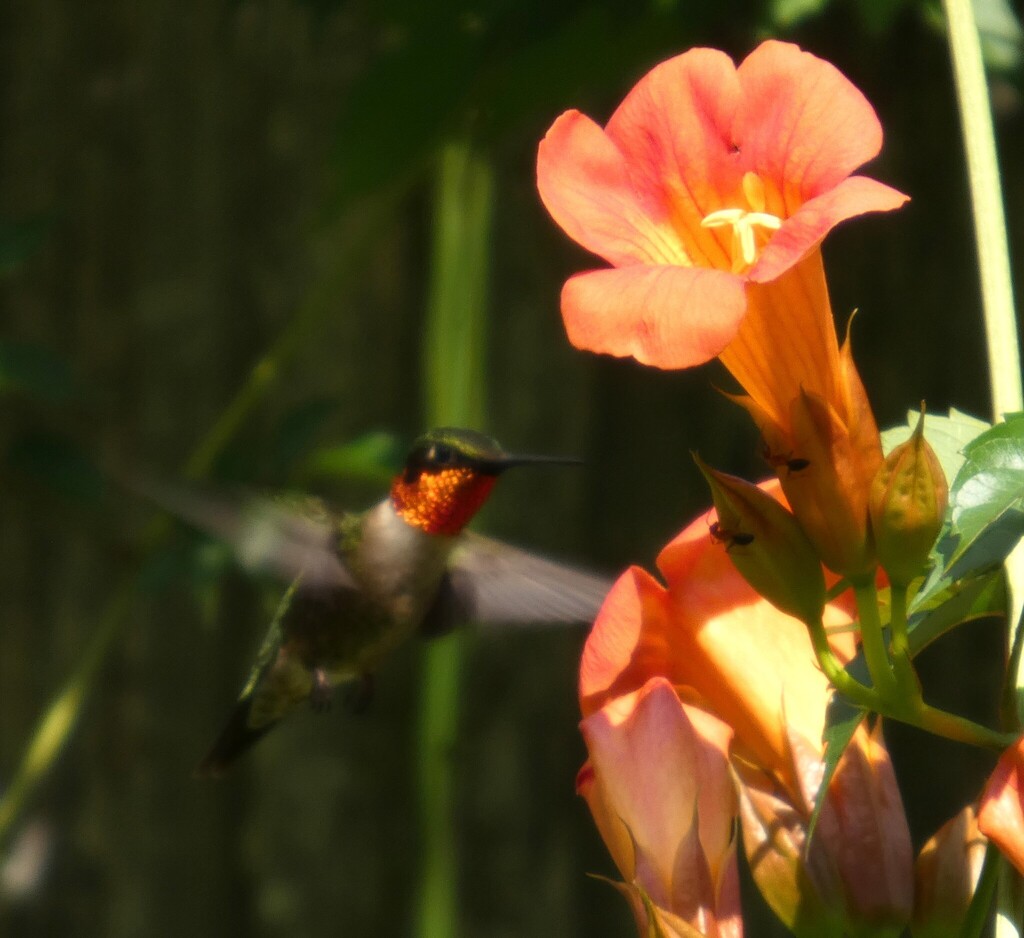
That’s not a fluke. Most people logging an insect on trumpet vine are recording whatever they happened to notice — usually the biggest, most obvious visitor. Repeat that across a hundred casual observers and you get the same handful of species logged over and over. It takes someone watching closely, and often, to catch the visitors that don’t show up on the first ten trips outside.
That closer attention turned up something unexpected: several small butterfly species recorded on trumpet vine — including the Red-banded Hairstreak — aren’t shown feeding at the open flower at all. They’re photographed on the unopened buds, working the surface before the bloom has even opened. Species like this typically can’t reach nectar down inside a tube as long as trumpet vine’s; the open flower isn’t built for them. But something about the bud surface — nectar leaking through unsealed tissue, or some other secretion — apparently draws them in anyway. It’s a behavior easy to miss if you’re only watching open blooms, which is exactly what most casual observations do.
My own observations are still adding to that record. With just nine species tallied so far under my name, I recently watched a Gulf Fritillary land on one of my open trumpet vine flowers — twice in the same day. I never managed a photograph either time; it was gone before the camera came up. It’s a small thing, but it’s exactly the kind of moment that doesn’t make it into the data unless someone happens to be standing there, watching, when it happens.
None of this is a reason to let the vine run wild, of course. Trumpet vine spreads aggressively by root suckers as well as seed, and keeping it contained — pruning it back hard, cutting root suckers as they appear, siting it away from structures it can damage — is standard advice for good reason. But that same pruning has a side benefit worth knowing: cutting mature vine back encourages bushier regrowth and more flowering stalk ends, meaning more blooms rather than fewer. Managing the plant for control and managing it for flower production point in largely the same direction.
The bigger takeaway, though, isn’t really about trumpet vine specifically. It’s a reminder of how citizen science data behaves. A thousand casual observers logging one flashy visitor each will never add up to the picture one patient, curious person can build by simply paying closer attention, more often, over more time. Diversity isn’t a headcount problem. It’s an attention problem.
 feeddayton-adtuk
Leave a comment